
Where Juvenile Releases Go
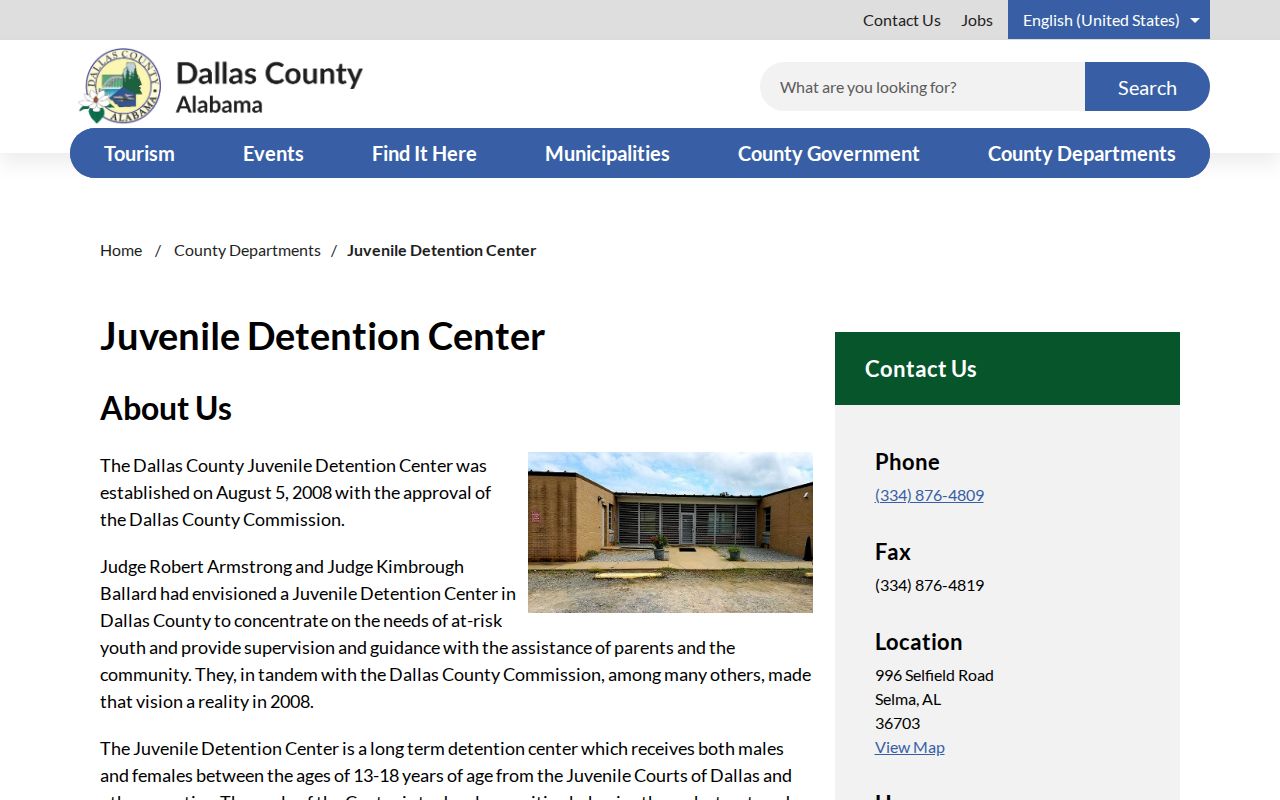
The Dallas County Juvenile Detention Center is a separate juvenile facility at 996 Selfield Road in Selma. Its release path is not the adult Dallas County jail path. A youth leaving juvenile detention may be released to a parent or guardian, a court-approved custodian, another juvenile placement, a treatment or supervision arrangement, or a court-directed setting. The specific route depends on the juvenile court order, counsel, probation or intake instructions, and the authorized parties in the case.
Juvenile matters are not ordinary adult public custody records. A youth's release generally should not be researched through public adult jail pages, adult mugshot pages, ADOC inmate search, Alabama prison discharge channels, or recent-release lists. The correct question is not whether the youth appears on a public roster. The correct question is which authorized person or office can confirm the court-approved release status without violating juvenile confidentiality. In many cases, that means the parent or guardian, the youth's attorney, the juvenile court, or facility staff acting within the limits of the case.
Confirm a Juvenile Release
Confirmation should start with the person who has legal authority to receive information. For a parent or guardian, that may mean contacting the facility or the court with identifying information and proof of relationship if requested. For counsel, it means using the legal case channel. For someone without authority in the juvenile matter, the facility or court may not be able to release details. A lack of public online information should be treated as a confidentiality feature, not as proof that no detention or release occurred.
- Identify the youth through the court or facility-approved process, not through an adult public roster search.
- Use the parent, guardian, counsel, court, or facility route that is authorized for the juvenile matter.
- Ask whether release has been ordered, whether any conditions apply, and who may receive the youth or obtain records.
- Confirm pickup instructions, identification requirements, time windows, and any court paperwork directly with the authorized office.
- Do not use adult mugshot, adult roster, ADOC, VINE, or commercial lookup pages as the release source for a juvenile detention matter.
The adult Dallas County released inmate search route explains county jail, court, ADOC, ABPP, and transfer checks for adult custody. Those channels should not be merged into a juvenile detention question unless a court-authorized record specifically moves the matter into an adult criminal process. For ordinary juvenile detention, the release boundary is narrower and more protective.
Juvenile Records and Contact
The official Dallas County Juvenile Detention Center page lists the facility contact details and identifies the facility director. Use the official county source for current contact information, PREA materials, and facility-specific instructions. Because juvenile records are sensitive, a request should be narrow and should explain the requester's relationship to the youth or legal authority to receive the information.
Dallas County Juvenile Detention Center
996 Selfield Road
Selma, AL 36703
(334) 876-4809
Fax: (334) 876-4853
Email: dtatum@dallascounty-al.org
Hours: Monday-Friday, 8:00 a.m.-5:00 p.m.
Director: Deputy Director Derrick Tatum
Official County Source
Dallas County Juvenile Detention Center page
Use for the official address, phone, fax, email, hours, director listing, and PREA link.
A parent, guardian, or attorney should ask the facility or court what documents are needed before pickup or record review. The answer may depend on the court order, custody arrangement, age, case status, safety conditions, and whether any other agency or placement is involved. If staff cannot discuss the matter with a caller, the next step is to contact counsel or the juvenile court rather than shifting to adult public search channels.
About Juvenile Detention
The Dallas County Juvenile Detention Center is a juvenile detention facility, not the adult county jail. It should be treated as a boundary marker in release research. Adult Dallas County jail releases may involve sheriff records, public-records requests, court records, ADOC transfers, ABPP supervision, VINE, BOP, or ICE transfer checks. Juvenile detention releases are different because the public-facing adult custody tools generally are not the proper source for a youth's status.
The official county page places the facility at 996 Selfield Road in Selma and provides a phone number, fax number, email address, office hours, director listing, and PREA link. Those details support a direct, authorized contact route. They do not create a public release feed. A release question should remain focused on lawful confirmation, authorized pickup, and the court's instructions.
Not an Adult Roster
The adult Dallas County Jail Temporary Facility handles local adult custody and is the source for adult jail release confirmation. The juvenile center is not a substitute roster for that facility, and the adult jail is not a proper lookup source for a youth in juvenile detention. Mixing the two can create incorrect conclusions and can expose information that juvenile confidentiality rules are meant to protect.
ADOC search is also not the ordinary juvenile detention route. ADOC is the Alabama state prison system, and its public search is built around currently incarcerated state inmates. A youth detained in a county juvenile setting should not be assumed to have an ADOC record, a mugshot feed, a prison release date, or a prison discharge record. If a juvenile matter has a rare adult-court component, use the court and counsel route to understand what public records, if any, exist.
| Source | Use for juvenile detention release? | Reason |
|---|---|---|
| Juvenile court, counsel, parent or guardian, facility | Yes, when authorized. | These are the proper case-specific channels. |
| Adult Dallas County jail roster or release feed | No public feed found, and not the juvenile route. | Adult jail records do not document ordinary juvenile detention status. |
| ADOC inmate search | No for ordinary juvenile detention. | ADOC is a state-prison custody tool, not a juvenile detention release list. |
| Adult mugshot pages | No. | Juvenile identity and custody details are confidentiality-sensitive. |
Pickup and Court Conditions
Pickup from juvenile detention should be confirmed directly through authorized channels before travel. A parent, guardian, or other approved person may need identification, court paperwork, custody documentation, or instructions from the juvenile court. Release timing can depend on a judge's order, intake decision, probation instruction, placement availability, or completion of paperwork. The facility may be unable to discuss those details with someone who is not authorized in the case.
Ask practical questions in a way that respects the confidentiality boundary. Confirm whether release has been approved, who may pick up the youth, what identification or documentation is required, where to arrive, whether the facility uses a specific entrance or time window, and whether any court-ordered conditions must be acknowledged. If there is a conflict about custody or authority, resolve it through the court or counsel rather than through public search tools.
Juvenile Record Limits
Juvenile records can be restricted even when adult jail records would be public. That restriction can affect names, photos, incident details, detention dates, release details, placement information, health information, victim information, and court documents. A caller may receive only general process instructions if they cannot show authority to receive case-specific information. This is different from an adult public-records request, where the question is often which parts of a booking or release record are public and which parts are exempt.
When a juvenile record is needed for a lawful purpose within the case, keep the request precise. Ask the court, counsel, or facility what form is required, who may request the information, whether an order is needed, whether copies are available, and whether the record can be inspected or only summarized. Avoid broad public-records language that treats the youth's detention as an adult booking event.
VINE, Federal, and ICE Limits
VINELink and Alabama VNS should not be presented as full juvenile detention release archives. Alabama VNS says its current site is for offenders convicted in Alabama and sentenced to ADOC custody, and it directs pretrial-case questions to the county sheriff. Juvenile detention matters generally need the juvenile court and authorized contact route. A VINELink or VNS miss should not be used as proof that a youth was not detained or not released.
No ICE detention facility or ICE county contract was confirmed for Dallas County, Alabama. If an unusual case involves federal or immigration custody, that information should come from the court, counsel, family-authorized channels, or the receiving agency. ICE ODLS, BOP, and EOIR are transfer fallback systems for specific custody facts; they are not juvenile detention release feeds for Dallas County.
Dallas Facility Map
The three Dallas County facility entries serve different roles. The temporary adult jail is the active local adult release-confirmation source. The juvenile detention center is a separate confidentiality-sensitive facility. The original Selma jail building is closed-building context after tornado damage, not an active public lookup source. Keeping these roles separate prevents an adult release workflow from being applied to a youth and prevents a closed building from being treated as the current release point.
- Dallas County Jail Temporary Facility: adult local jail release records, court checks, ADOC transfers, and physical pickup confirmation.
- Dallas County Juvenile Detention Center: juvenile detention release boundaries, authorized family/court/counsel routes, and confidentiality limits.
- Original Dallas County Jail / Selma jail building: tornado-damaged facility history and closed-building context.